80 Days review: a branching steampunk journey around the globe
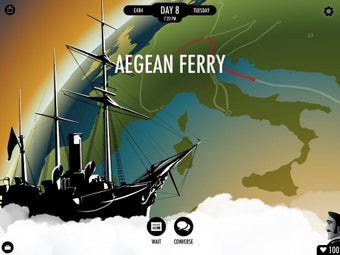
80 Days, developed by inkle, adapts Jules Verne into an interactive steampunk adventure where you play Passepartout and plan a circumnavigation. The app asks you to plot routes on a 3D globe while managing time, money, and Phileas Fogg's health. It combines thousands of branching choices, a trading system, and over 150 bespoke cities. The title targets players who enjoy narrative-driven strategy and high replay value on Nintendo Switch.
What kind of game is 80 Days?
In this game you act as a planner and problem solver, executing a core loop of route selection, resource management, and narrative choice. The story adapts dynamically to the thousands of branching choices you make, and the globe-based navigation forces tradeoffs between time and expense. Resource meters for budget and Fogg's health create tactical decisions, so play alternates between reading scenes and plotting the next departure.
Does it have multiplayer or social features?
Inside the journey a limited social layer exists, centred on a live multiplayer feed that shows other players' positions and routes in real time, without direct interaction. The game offers varied transport methods and a market economy that affect travel options and income. Key mechanical elements include:
- Transport diversity: airships, mechanical camels, steam-trains, submarines
- A trading system for buying and selling goods
- A live feed showing other players' progress
What does the game look and sound like?
While playing the presentation leans on Art Deco-inspired illustrations by Jaume Illustration and a written tone praised by critics. Review outlets singled out the writing and noted the Switch release fits portable play patterns. Audio cues are restrained to support narrative beats rather than action, and the visual design prioritises mood and character over flashy animation, which suits sessions where reading and choice are the primary activity.
Is it hard to get started?
Getting underway requires adapting to a real-time in-game clock that continues to run, which forces quick departure decisions. Players must balance finances, time, and the protagonist's wellbeing; those systems function as progression gates more than experience points. Failure to meet the 80-day wager does not abruptly end the story, so the game treats delay as an alternative narrative outcome rather than a hard fail state.
A strong narrative pick for readers who accept repeated play
80 Days is a recommendation for players who prioritise dense writing and portable sessions, supported by awards that include TIME Magazine's Game of the Year and an IGF narrative prize. Typical journeys take roughly two to four hours, yet the script covers far more content than a single run reveals, so the title rewards repeat engagement while demanding time investment from completion-focused players.